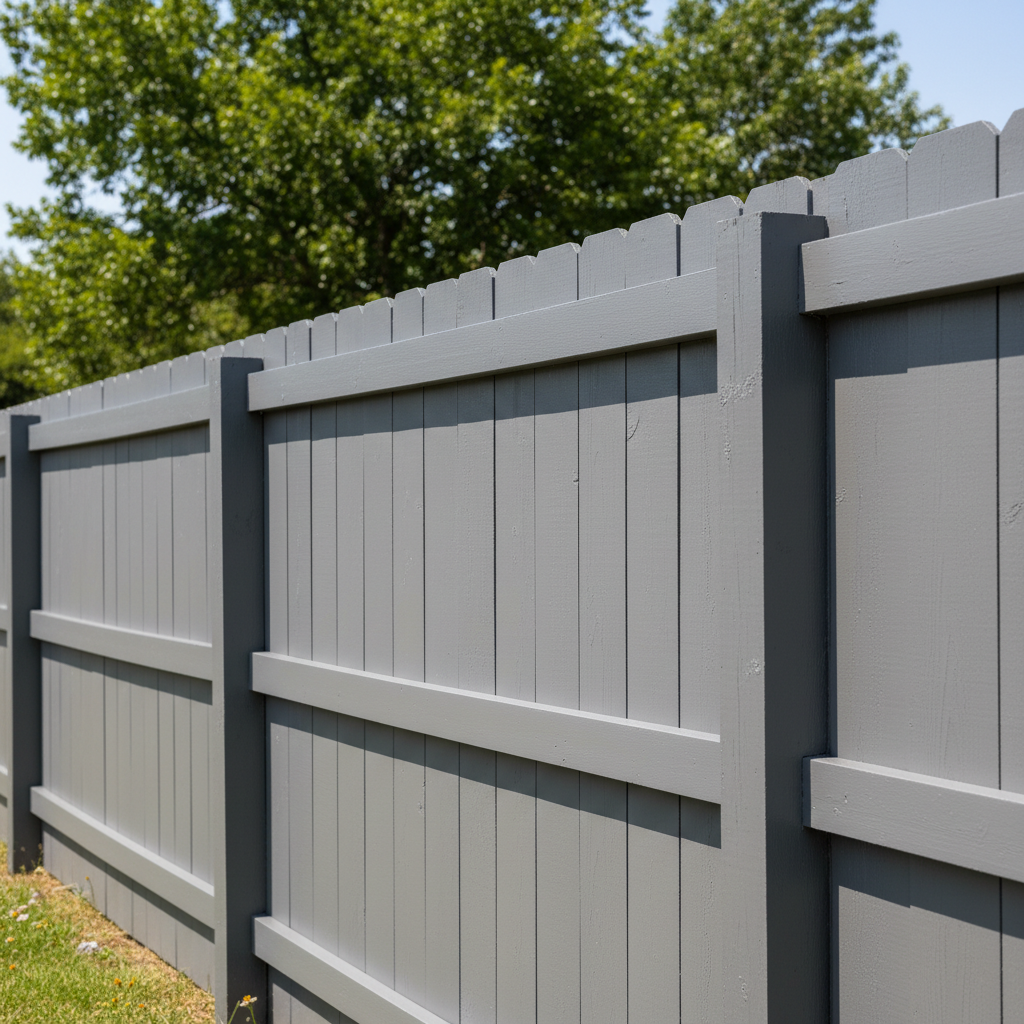
Alright, let's talk fences. You've got one, it's probably looking a little tired, and you're thinking about sprucing it up with some paint or stain. Good idea. A well-maintained fence not only looks better, but it also lasts longer, protecting your property and your privacy. I get a lot of questions about this from folks all over McKinney, whether they're in a newer development like Stonebridge Ranch or an older part of town with mature trees and original wood fences. So, I figured I'd tackle the most common ones right here.
Should I paint or stain my fence? What's the difference?
This is probably the first thing everyone asks, and it's a good one. It really comes down to what you want for looks and how much protection you're looking for. Paint sits on top of the wood. It forms a solid, opaque layer that completely covers the wood grain. Think of it like putting a coat on your fence. It gives you a huge range of color options – you can go bold, match your house, whatever. The downside is that paint can chip, peel, and flake over time, especially with our Texas sun beating down on it and the occasional heavy rain. When it does, it's a bit more work to prep for reapplication.
Stain, on the other hand, soaks into the wood. It's more like a deep conditioner. You've got different types: transparent, semi-transparent, and solid. Transparent and semi-transparent stains let the natural wood grain show through, which a lot of people love, especially with cedar or redwood fences. Solid stains offer more color and protection than the lighter stains, but they still allow some of the wood's texture to come through, unlike paint. Stain tends to fade and wear away rather than chip, which often makes reapplication a bit easier – less scraping involved. For most wood fences around here, especially if you like that natural look, I usually lean towards a good quality stain. It penetrates the wood, offering better UV protection and moisture resistance without hiding the natural beauty of the wood.
How long does a painted or stained fence typically last in McKinney?
This isn't a simple answer, because it depends on a few things: the type of product you use, how well the fence was prepped, and our crazy McKinney weather. Generally, a good quality exterior paint job on a fence might last anywhere from 3 to 7 years before it starts looking tired and needing a refresh. For stain, especially a good semi-transparent or solid stain, you're usually looking at 2 to 5 years. Transparent stains might need reapplication every year or two.
Our climate here plays a big role. We get hot, humid summers, freezing winters, and sometimes hail storms that can really beat up a fence. The intense UV rays from the sun are a major culprit for fading and breaking down finishes. Also, if your fence is in a spot that gets a lot of direct sun all day, or if it's constantly damp from sprinklers or poor drainage, it's going to wear down faster. Proper prep work is key too – if you just slap paint over old, peeling stuff, it's not going to stick and last. That's why we take our time with cleaning and prep at McKinney Painting Pros.
What's the best time of year to paint a fence in North Texas?
You want to pick your spots. The ideal conditions for painting or staining a fence are moderate temperatures and low humidity. Here in North Texas, that usually means spring or fall. Spring, from March to May, is great because the temperatures are usually in that sweet spot (50-85°F), and you don't have the intense summer heat. Just watch out for those April showers; you need a few dry days in a row.
Fall, from September to November, is also excellent. The heat and humidity start to back off, and you get those nice, clear days. What you want to avoid is the peak of summer. Trying to paint a fence when it's 100 degrees out is a nightmare. The paint dries too fast, doesn't adhere properly, and you end up with brush marks and a poor finish. Winter can be tricky too; even if it's not freezing, low temperatures can affect how the paint cures. So, spring and fall are your best bets for a lasting finish.
Do I need to clean or power wash my fence before painting or staining?
Absolutely, 100%, yes. This isn't an optional step; it's critical. Think of it this way: you wouldn't put a fresh coat of paint on a dirty wall inside your house, right? Same goes for your fence, but even more so because it's outside. Over time, fences collect dirt, grime, mildew, algae, and all sorts of other junk. If you paint or stain over that, the new finish won't adhere properly. It'll peel, flake, and just look bad in a short amount of time.
We always recommend a thorough cleaning. For most fences, a good power wash with a mild detergent is the way to go. You need to be careful not to use too high a pressure, especially on older or softer wood, because you can damage the fibers. After washing, you need to let the fence dry completely – and I mean completely – for at least 24-48 hours, sometimes longer if it's humid. Any trapped moisture under the new finish is just asking for trouble down the road.
What color should I choose for my fence?
This is where you get to have a little fun, but it's also where some people get stuck. The best color really depends on your house, your landscaping, and the overall look you're going for. A lot of folks around McKinney opt for natural wood tones if they're staining, which blends beautifully with the greenery and brick homes common here. Cedar tones, redwood, or even a clear sealant that just enhances the natural wood are popular choices.
If you're painting, you've got more options. A classic choice is to match your fence to a trim color on your house, or go with a neutral like a dark gray, black, or a deep brown. These colors tend to recede into the background, making your landscaping pop. White can look really sharp, especially with certain architectural styles, but it also shows dirt more easily and might need more frequent cleaning. My advice? Grab some samples, paint a small, inconspicuous section, and see how it looks at different times of day. Don't rush the decision.
How much does it cost to paint or stain a fence?
Alright, the million-dollar question, or maybe just the several-hundred-dollar question. The cost varies quite a bit depending on several factors. First, the size of your fence – obviously, a longer or taller fence will cost more. Second, the condition of the fence. If it's really old, dirty, has a lot of peeling paint, or needs repairs, the prep work will be more extensive and therefore more costly. Third, the type of product you choose. High-quality paints and stains cost more upfront but often last longer, saving you money in the long run.
Labor is a big part of the cost too. It takes time to properly clean, prep, and apply the finish. Getting an exact quote without seeing the fence is impossible, but generally, you're looking at a per-linear-foot price that includes materials and labor. When you call us at McKinney Painting Pros, we'll come out, take a look at your specific fence, and give you a clear, no-nonsense estimate. Don't just go for the cheapest bid; make sure you understand what's included and that they're using quality materials and proper techniques. A cheap job now can mean a much more expensive fix later.
Taking care of your fence is an investment in your home's curb appeal and longevity. Don't let it become an eyesore. A little attention now can make a big difference.