Alright, so you’ve got a hole in your drywall. Maybe the kids got a little too wild, or you moved a picture and now there’s an ugly anchor hole staring back at you. Whatever the cause, you’re looking at a repair job. The big question I hear a lot is, “Can’t I just fix that one spot and paint over it?” Or, “Do I really need to paint the whole wall?”
It’s a fair question, and honestly, there’s no one-size-fits-all answer. But as someone who’s been patching and painting walls all over McKinney for years, I can tell you what I’ve seen work and what usually ends up looking like a mess. We’re talking about two main approaches here: the spot repair and blend, or the full wall/room repair and repaint.
Spot Repair & Blend: The Quick Fix
This is what most folks hope for. You patch the hole, sand it smooth, prime it, and then try to paint just that repaired section to match the rest of the wall. Sounds easy, right?
- Cost: This is definitely the cheaper option upfront. You’re using less material and spending less time. If you’re doing it yourself, your only cost is materials. If you hire someone, it’s a smaller job, so the labor cost is lower.
- Durability: The repair itself, if you do it right, is just as strong as any other drywall repair. The issue isn’t the patch, it’s the paint.
- Maintenance: Low, because you’re only dealing with a small area.
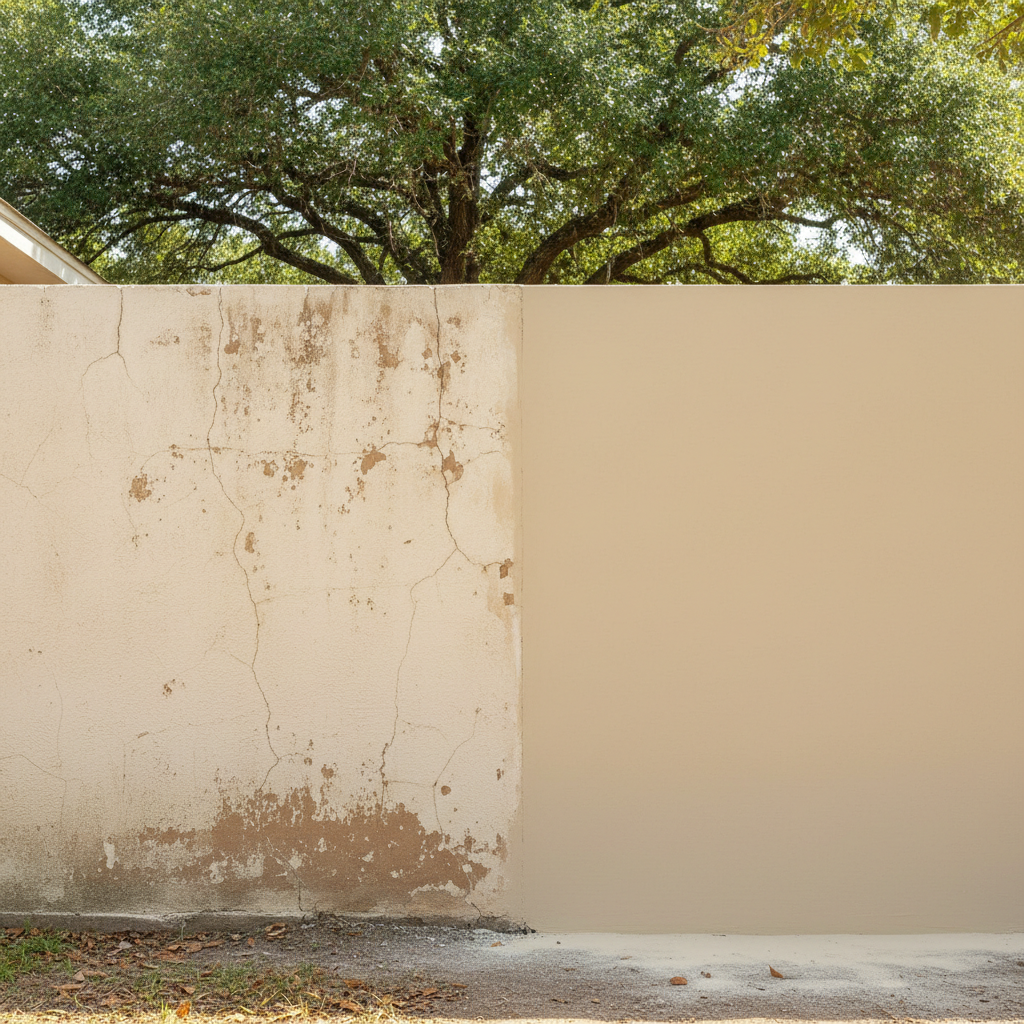
- Appearance: This is where you run into trouble, especially here in Texas. Our homes, particularly those built in the 80s and 90s in places like Stonebridge Ranch, often have walls that have seen a lot of sun, humidity, and general wear. Paint fades and changes color over time, even if it’s the exact same can you used five years ago. Dust, UV light, cooking fumes – it all plays a part. When you paint just a small section, even with the original paint, you’re almost guaranteed to see a “flash” or a “halo” around the repair. It’s like putting a brand new patch on an old pair of jeans – it just stands out. The sheen might be different, the color might be off just enough to annoy you every time you look at it.
Full Wall/Room Repair & Repaint: The Pro Approach
This is what I usually recommend, especially if you want the repair to be truly invisible and the wall to look fresh.
- Cost: Higher upfront. You’re buying more paint and it’s a bigger job in terms of labor. If you’re doing a whole room, it’s obviously even more.
- Durability: Excellent. The repair is solid, and the new paint job gives you a fresh, uniform, and protective layer across the entire surface.
- Maintenance: Easy. The whole wall is fresh, so cleaning is consistent. Plus, you’ll have leftover paint from the new batch for any future touch-ups that will actually blend.
- Appearance: This is the winner, hands down. Painting the entire wall from corner to corner – or even the whole room – eliminates any color or sheen differences. The repair disappears completely, and you get a beautiful, uniform finish. It looks intentional, not like a cover-up. You get that crisp, clean look that makes a room feel new again.
My Recommendation for McKinney Homes
Given our climate, the way our homes settle over time, and just the general wear and tear, I almost always lean towards the full wall or full room repaint after a drywall repair. Especially if your paint job is more than a couple of years old. Trying to spot-paint is a gamble, and more often than not, it’s a gamble you lose. You’ll end up staring at that slightly off-color patch, wishing you’d just done it right the first time. Then you’ll call someone like Mckinney Painting Pros to fix the fix, which ends up costing you more in the long run.
Think of it this way: a small drywall repair is a perfect excuse to refresh that wall or room. You’re already doing some work, why not make it look perfect? It adds value, makes your home feel cleaner, and you won’t have to worry about that glaring patch. If you’ve got a tiny nail hole and fresh paint, sure, try a dab. But for anything bigger, or on an older paint job, save yourself the headache and go for the full wall. You’ll be much happier with the results, trust me on that one. What have you got to lose?